Upcoming Workshop
2026 EuHPN Workshop
Standardising the Health Estate: Benefits, Boundaries and Risks
Main Programme 21-22 September; Study Tours 23 September
Dublin, Ireland
With the support of the Health Service Executive
As health systems look to improve patient outcomes, ensure resilience and contribute to sustainability goals, whilst controlling costs, attention increasingly turns to the option of standardising different components of the health estate. In broad terms, this means making the infrastructure more uniform and consistent – avoiding unnecessary variation and locking in best practice. While standardisation can undoubtedly offer some benefits, it is subject to boundaries, risks and impacts, and it gives rise to questions about the mechanisms for creating, maintaining and using standards and guidelines for healthcare facilities, and how to learn from international comparisons. Finally, we should not ignore the specific issues that arise from utilizing and optimizing the existing, legacy estate.
We are delighted to have the support of the Health Service Executive, Ireland, for the 2026 EuHPN workshop.
The 2026 EuHPN workshop’s main programme will explore some key domains of standardisation in the following sessions:
Benefits. Can standardisation of the estate make health services more efficient and productive services? Can it lead to better and more predictable clinical outcomes, improved staff satisfaction, reductions in energy use and waste, and lower costs associated with planning, design, construction and maintenance? If so, how will it achieve this?
Boundaries. Does standardisation apply to general or specific levels of health facility design and construction? In other words, should it focus on departmental layout and general arrangement of clinical and non-clinical spaces, or should it also include much more granular design choices, down to the details of finishings, room fixtures and equipment choice?
Risks and Impacts. Could additional standardisation lead to loss of capacity for innovation and flexibility, inability to respond to local contexts, and failure to account for future health system needs? Or could it give healthcare organisations freedom to innovate and to build in more future flexibility? How can we mitigate the risks and balance the pros and cons?
Standards and guidance. In a more standardised health estate, what will be the future role of standards and guidance documents? Should they migrate to being more or less prescriptive? And who will or should produce them?
Utilisation and optimisation of the existing estate. How can we make the most effective use of existing land, buildings and equipment to meet modern standards for clinically excellent, patient focused, sustainable healthcare environments?
International comparisons. Can we find examples of success, or reasons for caution, from comparisons between standardisation of the estate, or optimising the use of existing facilities, in different countries?
On Wednesday 23 September we offer a variety of optional study tours. In the morning, all participants will be able to visit the New Children’s Hospital, the landmark, soon-to-be-completed paediatric hospital that brings together services from three existing children’s hospitals. This is a modern, digitally-enabled, custom-designed campus, which aims to provide the best possible care and treatments to Ireland’s children and young people. This tour will start at 10.00 and finish at 12.00, with travel arranged from a central point from 09.00.
After a pause for a light lunch and onward travel, we are currently offering a choice of one of three other study sites. Afternoon tour participants should choose one of the following options:
· The Rotunda Maternity Hospital’s new department at Hampson House, which includes maternity outpatients, paediatric outpatients, colposcopy and allied health services.
· The new National Forensic Mental Health Service (NFMHS) Facility - a modern, secure, purpose-built complex that is compliant with all relevant healthcare standards.
· One of Ireland’s new surgical hubs, intended to improve access to elective care, and procured according to a standardised brief and design.
Please note that study tour options may be subject to change, depending on the operational requirements of the site owners.
This year we welcome an amazing range of expert speakers and facilitators, drawn from professional backgrounds in health facility planning, design, engineering and construction, healthcare infrastructure financing, facilities management, clinical science and academic research. They represent public and private sector organisations from countries and health systems across Europe and beyond. As ever at EuHPN events, our speakers and facilitators aim to inform, challenge and engage with our audience.
You will find more information about the speakers and facilitators, and the topics they will address, in the draft workshop programme.
We are delighted to have the support of the Health Service Executive (HSE), Ireland, in planning the 2026 workshop, and we are grateful for their assistance. The HSE is Ireland’s public health and social care service, which aims to provide quality care and support to people at all stages of life. As well as offering a range of health and care services, the HSE’s Strategic Health Infrastructure and Capital Delivery (SHICD) department manages the planning, development, and funding of Ireland's public health and disability infrastructure.
The EuHPN annual workshop is not an academic conference, and it is not a commercial event. It is a meeting place for professionals working in healthcare infrastructure development, with a range of different backgrounds in facility design, construction and management, healthcare engineering, project management, infrastructure financing, academic research and R&D. The overall aim of each workshop is to share knowledge and learn about best practice and the latest thinking in the field. Our speakers and our audience reflect this eclectic mix, and represent many different types of organisation from the public and private sectors.
The workshop’s location changes from year to year, with recent events being held in Oslo (2025), Barcelona (2024) and Copenhagen (2023). You can view the presentations from these events here. In 2026 we are delighted to be in Dublin, at the iconic Thomas Prior Hall, in the Ballsbridge area of the city. The workshop is being organised with the collaboration and support of the Health Service Executive (Ireland’s public health and social care service), the EuHPN board and our network member organisations.
The workshop’s main programme takes place over two days, with a mix of keynote speakers and thematically arranged presentations. With audience numbers capped at around 100 attendees, there are ample opportunities for interactive discussions. These often continue outside the hours of the formal programme, at the workshop dinner or at other social opportunities. Our workshops attract sponsorship from a small number of supporting organisations, and we encourage their representatives to take a full and active role in contributing to the workshop’s learning aims.
On the third day of the workshop we organise optional study tours of health facilities in the local area, aiming to showcase some practical examples of innovation and excellence.
EuHPN workshops are multinational, multi-professional, and a great way to learn about the latest in healthcare infrastructure development. We would love to hear your proposal for a presentation, and you should feel free to encourage your colleagues and contacts to do the same.
08.00 – 08.45 Registration.
08.45 – 09.00 Welcome to Dublin and Ireland.
09.00 – 09.30 Keynote address.
Brian O’Connell, National Director, Head of Strategic Infrastructure and Capital Delivery for the Health Service Executive, Ireland
09.30 – 11.00 Session 1: Benefits
Standardise What Matters: Lessons from Norway’s New Stavanger University Hospital. Florian Wagnerberger, Camilla Heier Anglero Office of Architecture, Norway
The Benefits of Standardization in Hospital Design and its Inventory for the Prevention of Hospital Acquired Infections. Margreet Vos Erasmus MC, Rotterdam, Netherlands
Standardising Hospital Infrastructure through Industrialized Building Services: benefits, risks and mitigations, Lessons from the Málaga Hospital Case. Raffaella Scorziello, Constantino Gago Fernandez SENER MOBILITY SA, Spain
Taking a Standard approach to Scotland's Community Care and Wellbeing Programme. Paul Mortimer Scottish Government, Scotland
11.00 – 11.30 Coffee break
11.30 – 13.00 Session 2: Boundaries
Standardizing lay-outs for future flexibility: when does this future arrive? Rien Goedhart, Liesbeth van Heel Erasmus MC, Netherlands
From state to voluntary organisations, from standards to recommendations and back. Göran Lindahl, Marie Larsson CVA, Center for Healthcare Architecture, Chalmers University of Technology, Sweden
"Polderen": consensus collaboration leads to "own" standards. Willemineke Hammer EGM architects, Netherlands
Data driven decision-making to optimize space utilization in Hospitals - how to do more with less. Gunnar Hansen Omega365 Solutions AS, Norway
13.00 – 14.00 Lunch
14.00 – 15.30 Session 3: Risks and Impacts
Reducing Risk across the NHS Infrastructure in the UK - The role of the Authorising Engineer (AE). Paul Fenton, Pete Sellars The Institute of Healthcare Engineering and Estate Management (IHEEM), UK
The impact of facade standardisation. Architecture, society and health. Clara Rius, Agostina Ferrentino Ahead Research for Architecture, Spain
Fire Safety and the Standardised Hospital Katrina Simpson OFR Consultants Ltd
Standardising Interior Finishes in Healthcare: Balancing Carbon, Performance and Clinical Reality. Eric Berteau Gerflor, France
15.30 – 16.00 Coffee break
16.00 – 17.15 Ireland’s elective and surgical care hubs: standardisation to achieve accelerated delivery of high quality facilities.
Round table discussion with invited panelists from Ireland, including representatives from the HSE, the construction industry and other project partners.
19.30 – 22.00 The 2026 EuHPN Workshop Dinner.
The Exchange at Fallon & Byrne Exchequer Street Dublin
The Exchange room at Fallon & Byrne is housed an iconic Victorian era building, previously a telephone exchange, which is now home to an artisan food hall, a casual café, a wine cellar and a contemporary dining space. The building sits at the heart of Dublin city centre, ideal for a pre- or post-dinner drink.
09.00 – 10.30 Plenary session – views from east and central Europe
Getting the balance right: standardisation versus responsiveness to local need, in the context of accelerated development of healthcare infrastructure in east and central Europe. Speakers from International Finance Institutions, health ministries and project sponsors.
10.30 – 11.00 Coffee break
11.00 – 12.30 Session 4: Standards and Guidelines
Standardisation and Flexibility in Mental Health Buildings/Design for mental health. Cecilie Henninen Flottorp, Marte Tøndel Sykehusbygg, Norway
Standards, Guidelines and the Spaces Between: How the UK and Sweden Shape Hospital Design. Lienelle Geldenhuys White Arkitekter, Sweden
Standardising the Health Estate: A common language initiative from and for hospitals. Gijben Hornes, Rien Goedhart Platform Kennisdeling Vastgoed Ziekenhuizen (PKVZ), Netherlands / Belgium
Lessons Learnt Anne Symons The Bartlett School of Sustainable Construction, UCL, UK
12.30 – 13.30 Lunch
13.30 – 15.00 Session 5: Utilisation and Optimisation of the Existing Estate
Glasgow’s New Front Door – Parkhead Integrated Health and Care Hub. Richard Mann, Andrew Baillie AECOM and NHS Greater Glasgow and Clyde, Scotland
Process of renovation on site of a Health infrastructure as a more Sustainable choice, several examples in Spain. Luis González Sterling Argola Arquitectos SLP, Spain
Engineering Approach to the Strategic Transformation of an Ageing Hospital Estate. Guadalupe Gonzalez PMeirovich Consulting, Spain
Standardising Insight, Not Outcome: A Data-Driven Approach to Optimising the Health Estate. Alice Green Arcadis, UK
15.00 – 15.30 Coffee break
15.30 – 17.00 Session 6: International Comparisons
International collaboration in a Wastewater Cleaning System (THERESA PCP). Marcin Kautsch Olsztyn Hospital / THERESA Project, Poland
The application of standardisation through modularisation in Australian health facilities; the good, the bad, and the ugly. Gunther De Graeve Destravis, Australia
Designing Resilient Healthcare Systems in Seismic and Climatic Extremes: Insights from Peru’s National Hospital Programme. Stephen Herbert, Jason Pearson AECOM, UK/Peru
The importance of the relationship between standardisation and local standards: International lessons learned. Katie Wood, Alex Senciuc Archus, International
17.00 – 17.30 Round table discussion with invited guest panelists; reflections on the workshop and lessons learned.
On Wednesday 23 September we offer a variety of optional study tours. In the morning, all participants will be able to visit the New Children’s Hospital, the landmark, soon-to-be-completed paediatric hospital that brings together services from three existing children’s hospitals. This is a modern, digitally-enabled, custom-designed campus, which aims to provide the best possible care and treatments to Ireland’s children and young people. This tour will start at 10.00 and finish at 12.00, with travel arranged from a central point from 09.00.
After a pause for a light lunch and onward travel, we are currently offering a choice of one of three other study sites. Afternoon tour participants should choose one of the following options:
· The Rotunda Maternity Hospital’s new department at Hampson House, which includes maternity outpatients, paediatric outpatients, colposcopy and allied health services.
· The new National Forensic Mental Health Service (NFMHS) Facility - a modern, secure, purpose-built complex that is compliant with all relevant healthcare standards.
· One of Ireland’s new surgical hubs, intended to improve access to elective care, and procured according to a standardised brief and design.
Please note that study tour options may be subject to change, depending on the operational requirements of the site owners.
09.00 Participants will be asked to gather at the Clayton Hotel entrance (next to the Thomas Prior Hall) for a 09.00 departure by coach.
09.00 – 09.45 Travel to the Children’s Hospital Ireland.
09.45 – 10.00 Participants divided into groups.
10.00 – 12.00 Tour of the Children’s Hospital Ireland.
12.00 – 13.30 Lunch and travel to one of the other optional study tour sites.
13.30 – 15.00 Study tour of one of the following sites:
· The Rotunda Maternity Hospital’s new department at Hampson House.
· The new National Forensic Mental Health Service (NFMHS) Facility.
· One of Ireland’s new surgical hubs.
15.00 – 15.45 Travel to airport for participants who are leaving. Transport to central Dublin may also be possible.
15.45 Airport drop off / City centre drop off.
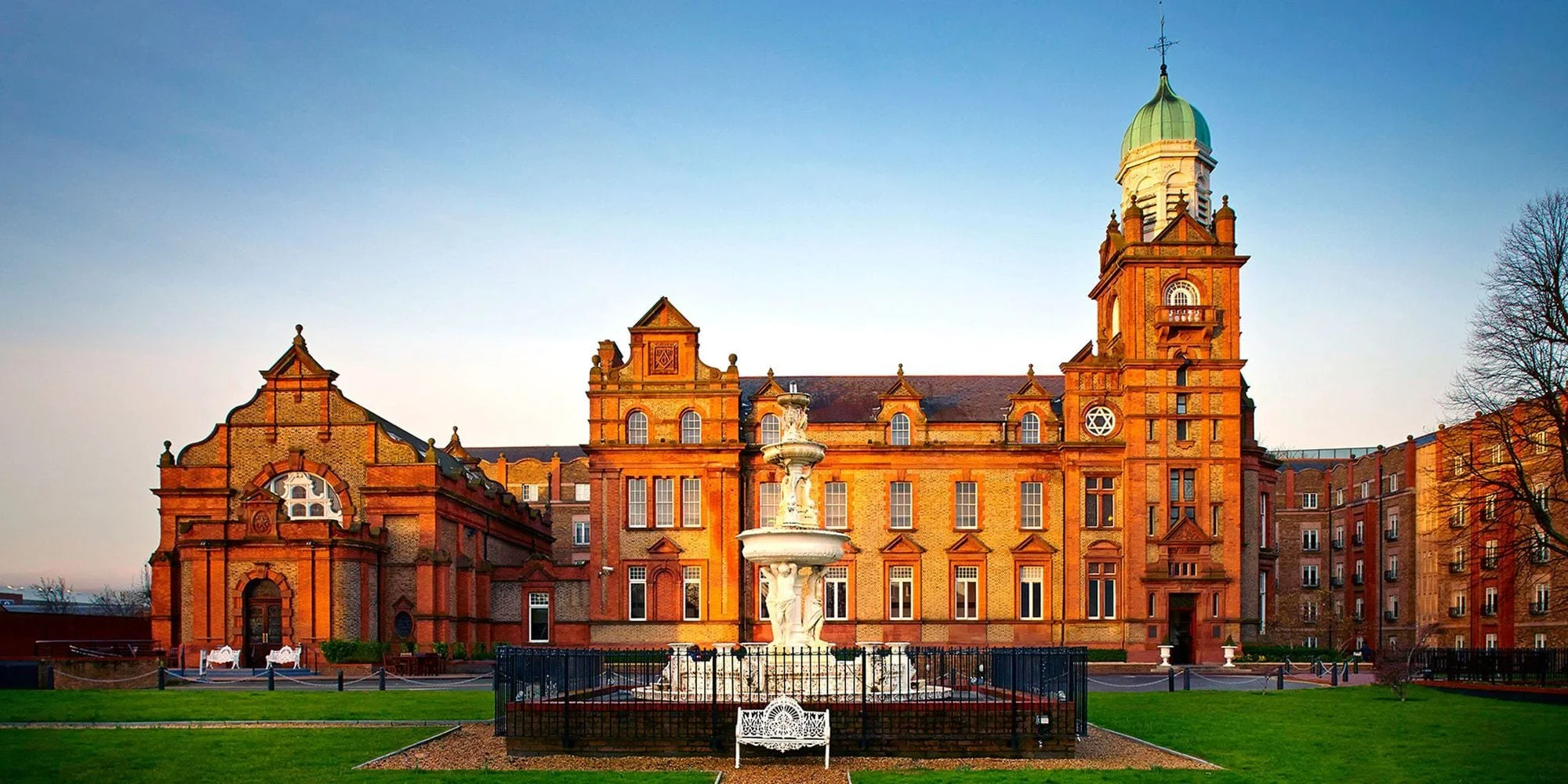
The 2026 EuHPN workshop will be hosted at Thomas Prior Hall, a historic 19th-century venue located in the heart of Ballsbridge, Dublin.
Rich in history and character, Thomas Prior Hall provides a distinctive setting for the conference while offering convenient access for delegates. The venue is located in Dublin 4, just a one-minute walk from the RDS arena, a 10-minute walk from the Aviva Stadium, and approximately 20-25 minutes from Dublin city centre by public transport or taxi services.
An adjacent hotel connects directly to the venue, and a range of public transport options make it easy to access accommodation across the city.
We look forward to welcoming participants to Dublin for the 2026 EuHPN workshop.
The adjacent Clayton hotel (Ballsbridge) connects directly to the venue, but there are plenty of public transport options that would allow participants to choose other locations for hotel accommodation. We cannot directly recommend any specific hotel options, but on registration we will supply a discount code for the Clayton hotel, which is conveniently located next to the workshop venue. We will also provide some suggestions for other accommodation options near the venue and in the city centre.
Registration for the workshop is now open.
The participation fee for the workshop is Euro 410.00 for members of affiliated EuHPN organisations, and Euro 460.00 for other participants. This includes coffee breaks and lunches on the 21 and 22 September.
The workshop dinner will be held on Monday 21 September; this has an additional fee of Euro 100.00 for all participants.
Invoices for the workshop fee(s) will be issued once your registration form has been received. If there is a need to limit numbers at the workshop, the workshop dinner, or the study tours, we will process registrations in the order they are received and will not invoice until we can guarantee a place.
The study tour has an additional charge of Euro 50.00 to cover transport and refreshments. Details of the study tours are in the outline workshop programme.